Custom Dress Form v2.0: part 4

As you’ve already met Q, let’s get straight down to business shall we.

Most of the following steps are a hodgepodge of Suzanne Stern‘s couture dress form customization instruction on Threads Archive DVD (issues 44, 45, 48) and Wolf Forms production process article again on  Threads Archive DVD (issue 141) and the How It’s Made TV segment on Wolf Forms on YouTube.

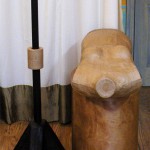
3-3 To recap, I’ve now got Q post reduction surgery and on her one flimsy PVC leg with a hefty wooden hoof. Next up was fattening her back up.

As she was originally my size with a fairly uniform reduction (1/2″ at CF, CB, sides), theoretically I can put an even layer of padding on her. But I might have complicated things a little bit by also taking in a little bit for the breathing ease that was wrapped into the original paper tape – I want the option to be able to make skin-tight corset or evening dress.

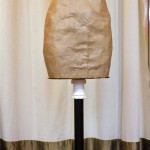
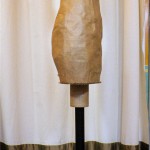
So one precaution I took was to cut rayon seam binding tapes measured to my key circumference measurements (+ a bit for overlapping & pinning / sewing close). After I wrapped an even layer of 2-1/2 oz cotton-wool blend upholstery padding, I wrapped these seam binding tapes around the padded form and made sure the fluffy padding can be compressed to the right size. If the tapes won’t close at the markings then there’s too much padding, if it’s loose then there’s not enough padding. Here she is with her lovely rolls spilling over the tapes!
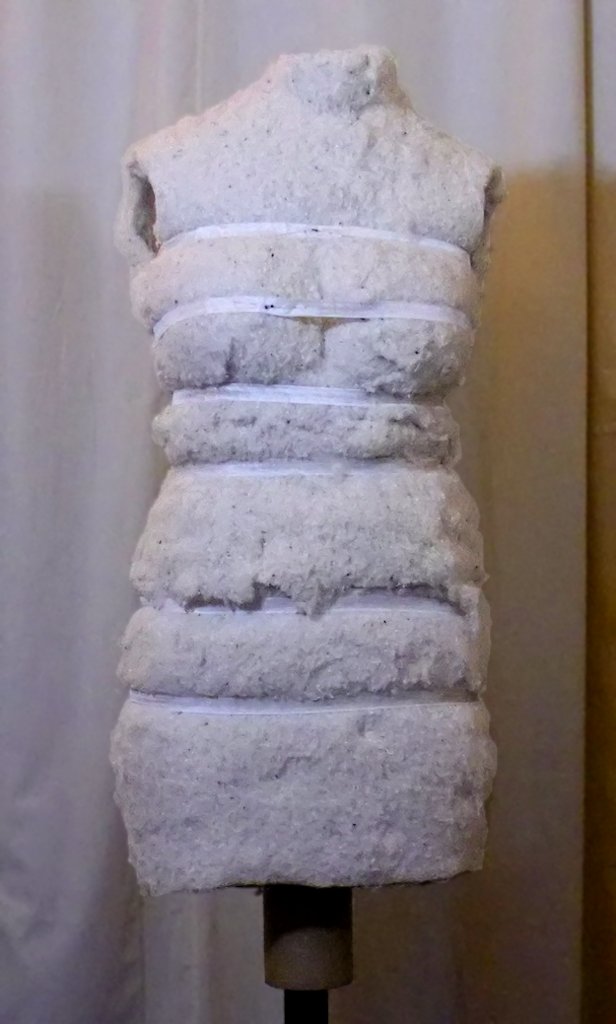
4-1 4-2

A second precaution is to use my moulage pattern for the thin non-woven interfacing that covers the fluff. This way, I can adjust the padding to better fit the cotton drill moulage cover that will be Q’s final skin.

First though I needed to do a final check on the moulage fit. So I made the cotton ticking moulage cover next:
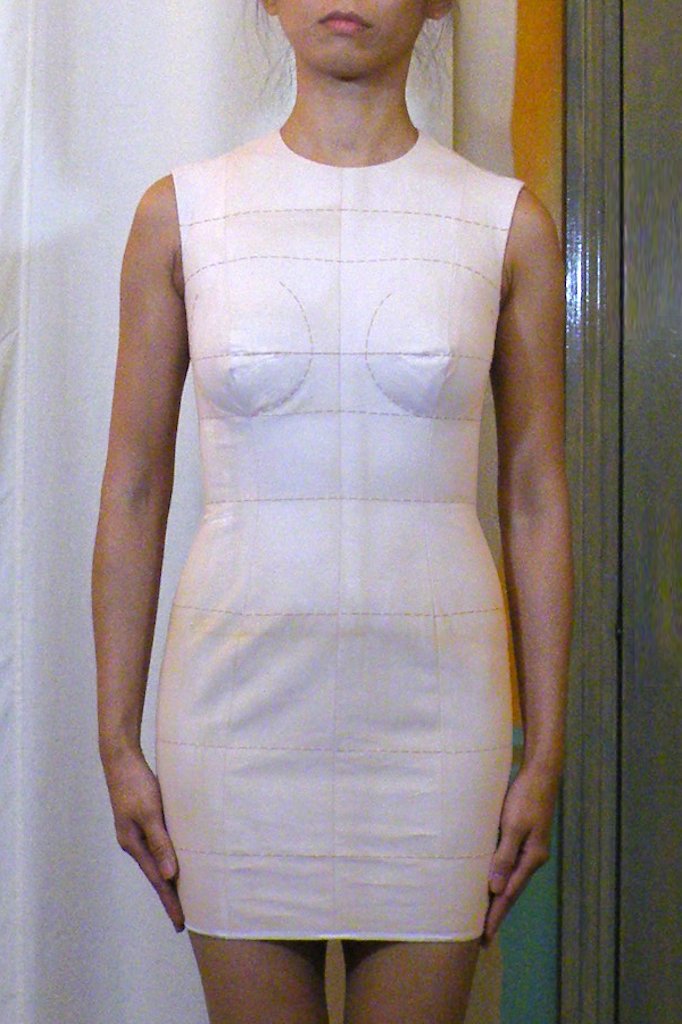
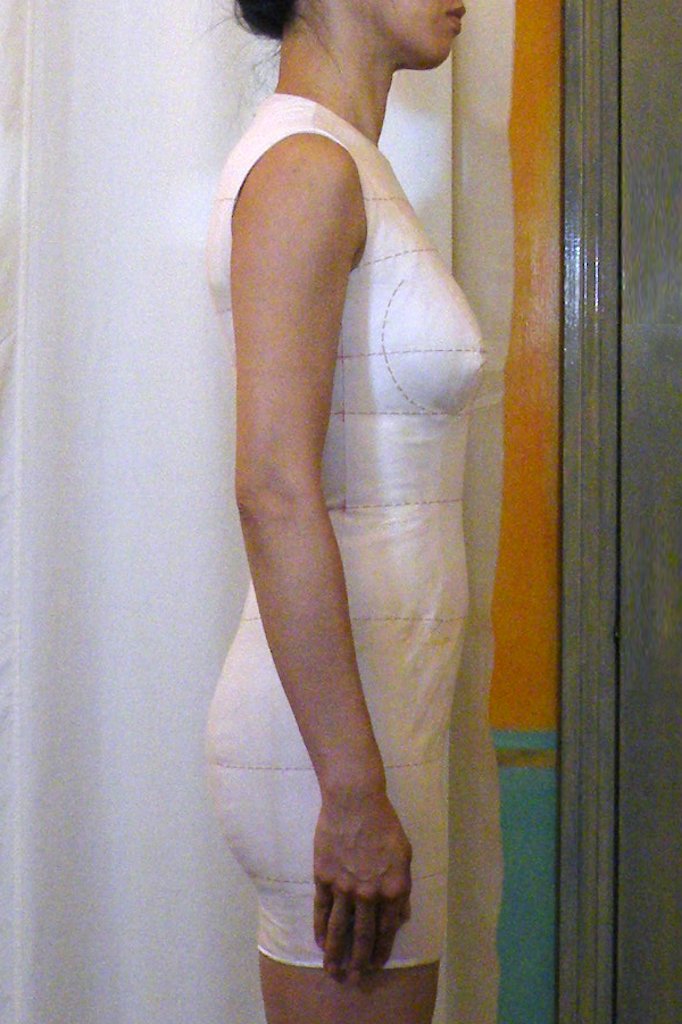
4-mc-f4-mc-sR4-mc-b4-mc-sL

OK, there still seems to be some draglines in the photos. It actually doesn’t look as bad in real life. As I’m not a starlet who’ll be papped on the red carpet for the tabloids I gave myself permission to ignore the less than perfect photographed results.

5-1So with moulage pattern checked, I cut and pinned together the thin non-woven interfacing version. I then put this on Q with CF closure and checked the amount of padding again. Most of it was fine. It was a tight fit, but with a bit of careful tug and occasional spot fusing with a dry iron, I was able to rein in the fluff and get the interfacing moulage on.

The bust was a problematic area. I had to add extra padding to fill the bust out. I also used the underwires from an old decent-fitting bra to check the bust shaping. A pin was hammered in between the girls to get the cleavage right. Once it all checks out, I fuse the interfacing to the padding with dry iron on wool setting. The pins holding the interfacing moulage together came out after I’ve fused the seams.

5-25-3

Here’s Q after interfacing wrapping, still sporting her rolls:

5-65-55-7

Next up is a thin cotton jersey cover. I needed this extra layer because my cotton ticking cover doesn’t cover the neck.

6-16-26-3 6-4

This was actually a hand-me-down from Big Bertha, my previous Duct Tape Double. So it was already shaped to fit my figure and just needed closing off at the neck and armholes.

Again, I hammered pins in to create the underbust and cleavage shaping. The bottom, like the interfacing layer, is folded over the hem edge and in this case stapled to Q’s cardboard bottom using a staple gun leftover from my collage days. (The interfacing was just fused to the cardboard.) … And where have the rolls gone?

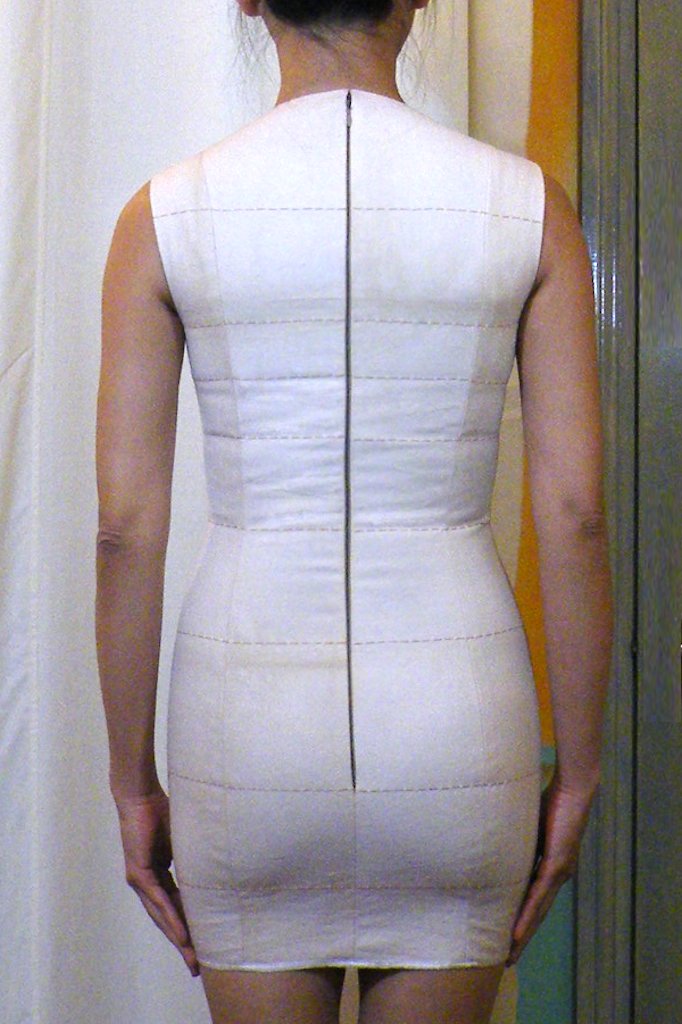
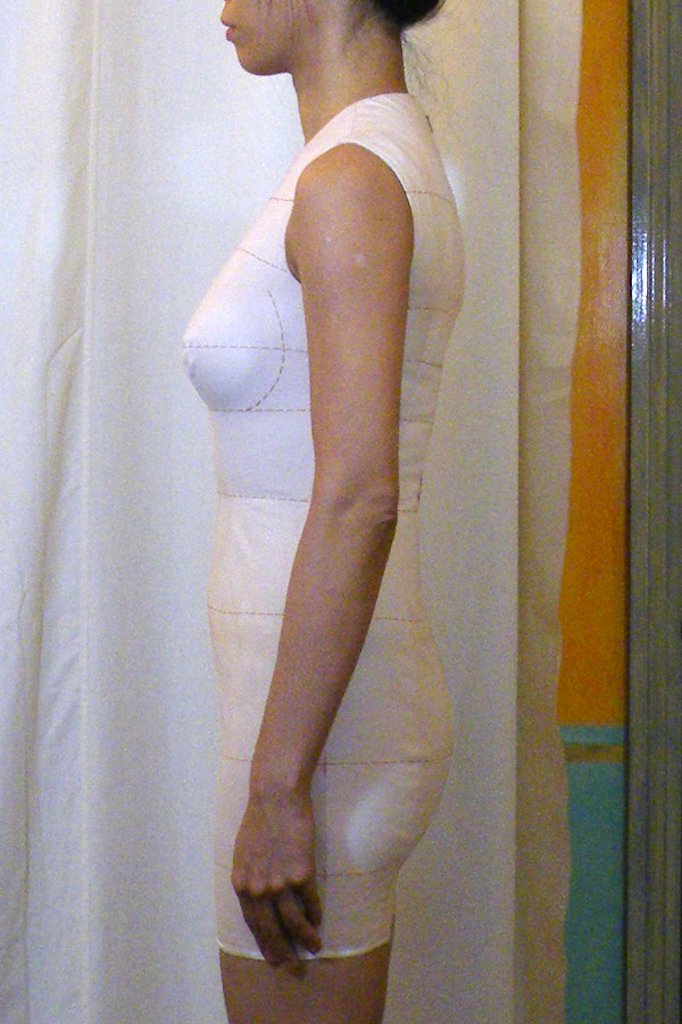
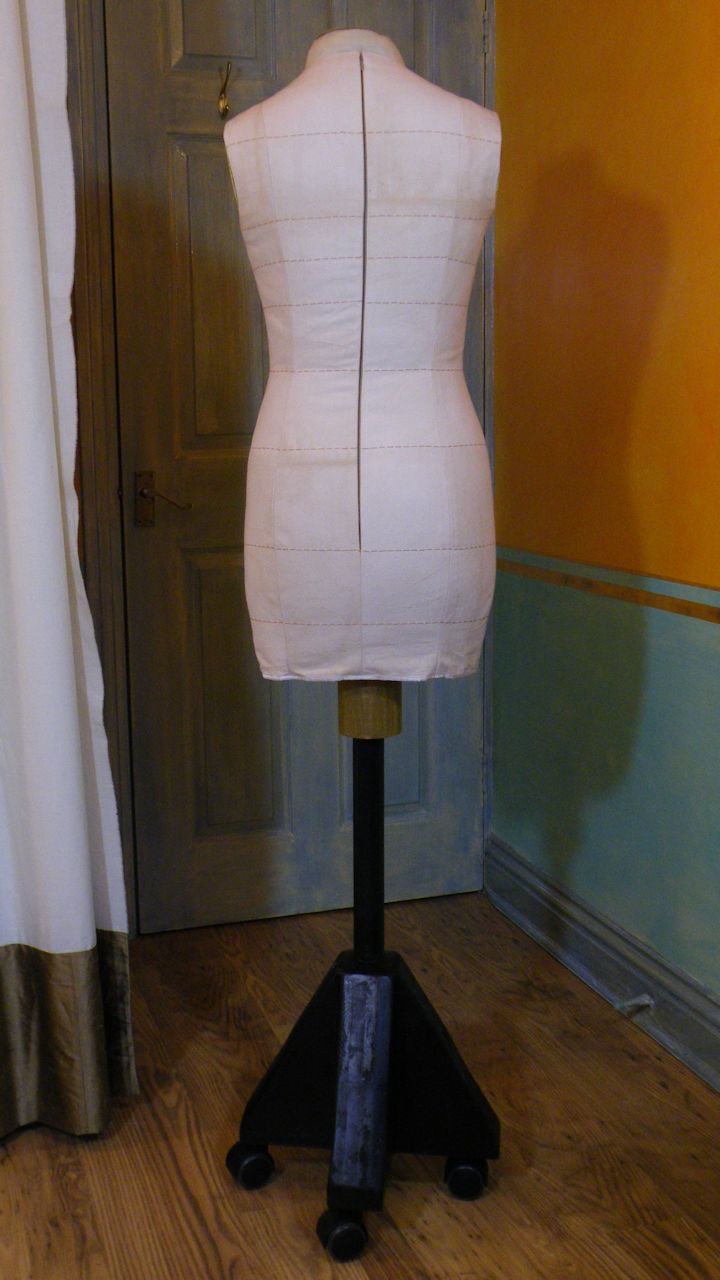
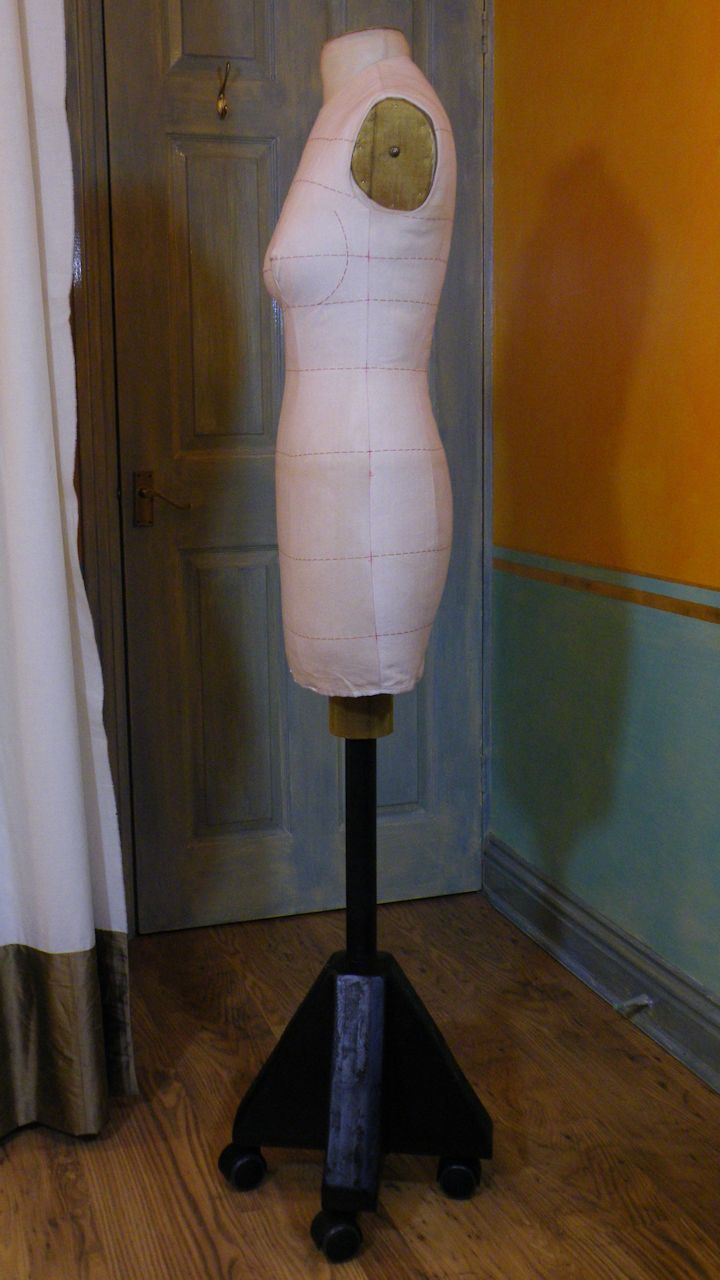
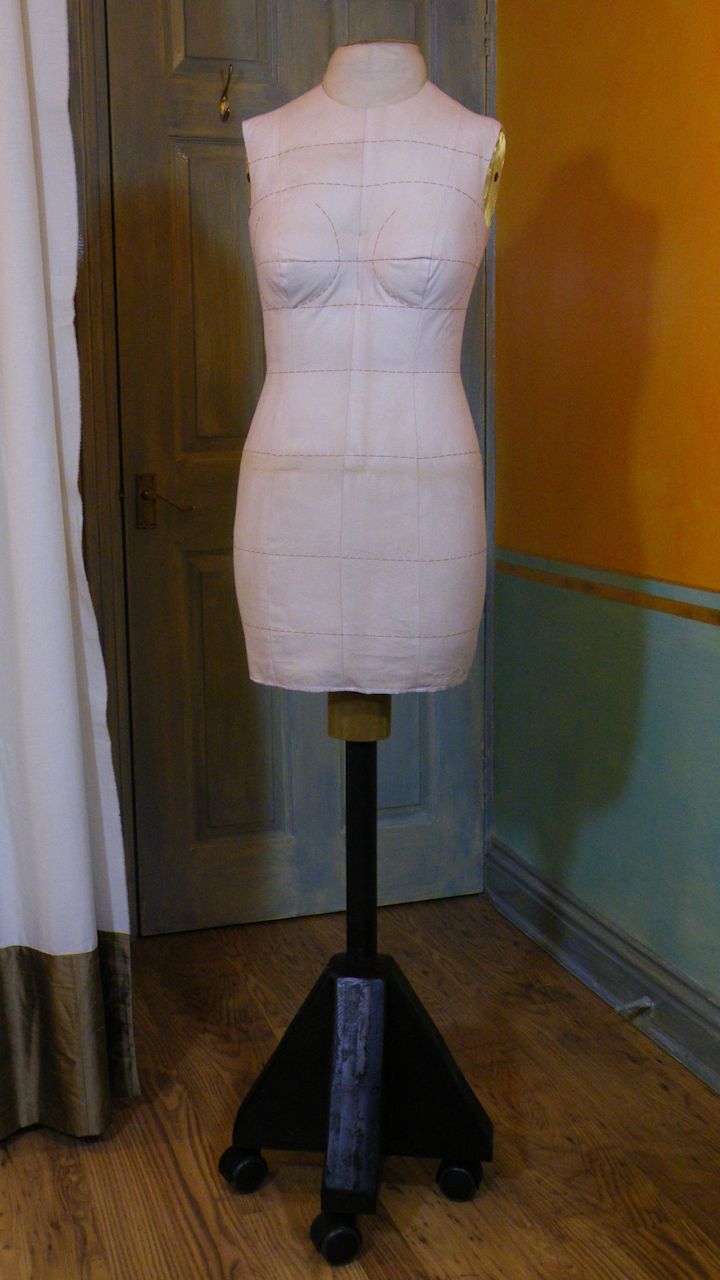
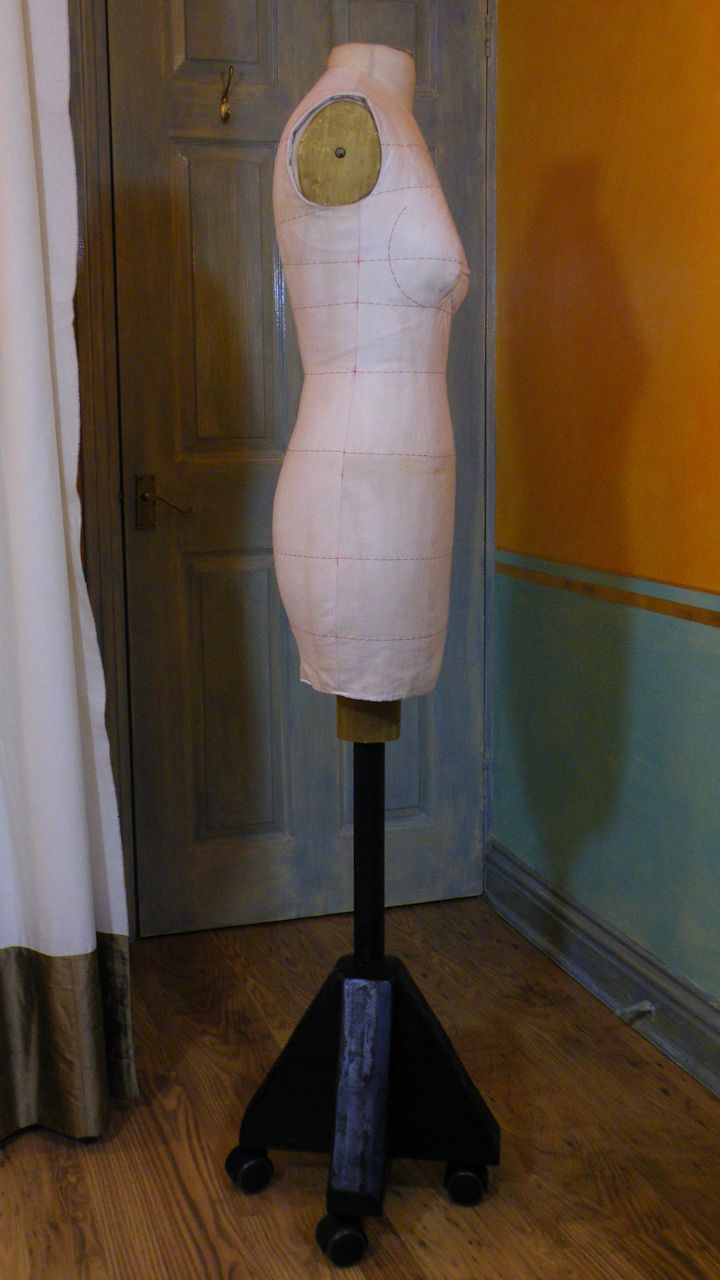
And this brings us up to date and those photos of Q in her cotton ticking  moulage skin, which is made with a center back zipper so it can be taken off if I ever want to check the fit on myself again.
finished-Ffinished-sRfinished-Bfinished-sL

The ticking I got from John Lewis’ home decor fabric department is relatively thick – probably mid to heavy-weight. It covers any stubborn left-over rolls. You could probably use drill or canvas as well. I stained mine with cheap tea to give it an antiqued look. And although I added a CF bust fish-eye dart, I still hammered yet more pins for a more defined cleavage. The key circumferences are thread traced with top-stitching threads to guide future draping projects.

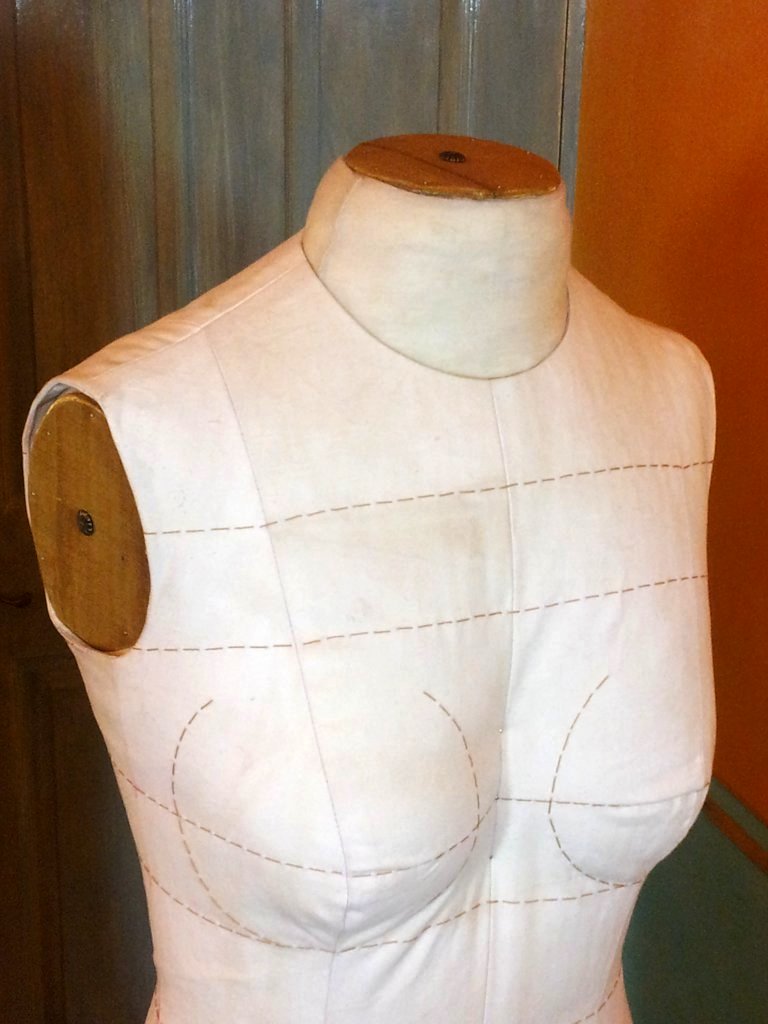
The neck and armholes I could have just left with the jersey covering. But as I had some craft brass wire mesh and decorative floral head tacks in the stash, I added metal looking caps to make Q look even more like the Wolf Forms. The mesh is wrapped around a cardboard layer, then tack in the center to the cardboard layers already covering these holes. More pins are hammered in closer to the edge of the disc to make it more secure. One downside of this prettification is that the cut edges of the wire mesh is a bit scratchy. Hopefully they won’t snag any fine fabric draped on Q.
finished-detail1 finished-detail2

And look, Q takes pins no problemo! I could pin into just the ticking cover or I can stick one right into her. The middle pin is as far as the pin will go and it looks pretty secure.

So mission accomplished. Well done Q!

Now obviously not everyone’s going to go through the trouble for a dress form. So maybe I’ll write up some tips & learnings from my experience next time.
Custom Dress Form v2.0: part 3 & a bit

Q is finally finished late last night. Just in time for me to go back to work and do nothing with her for a while. Typical!

It may take me a few days to organize a proper write up. In the meanwhile, here’s a preview of what she looks like to keep you sweet:

Humm, that CF & CB seems to be twisting. But they seem to be twisting in the same direction. So may just need a little tugging with the cover.

Christmas came early! More books…

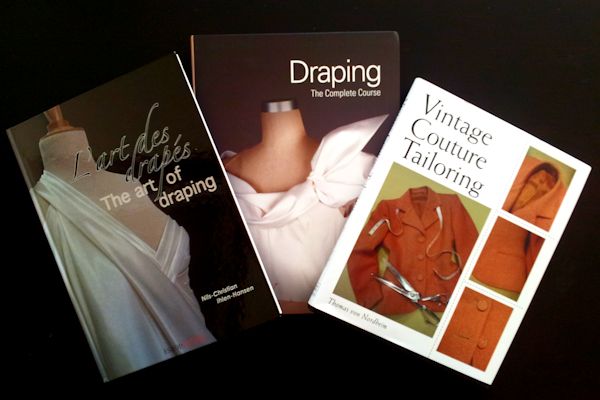
Look what came in the post today: These lovelies to keep me motivated on finishing Q, my new home-made dress form.

books

I haven’t read them in-depth yet. So no review. Just first impressions / why I bought them.

I already own Draping for Fashion Design, so don’t really need another draping book. But come on, who can resist all those luscious photos. Drool.


The art of draping

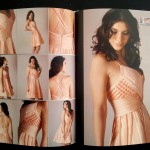
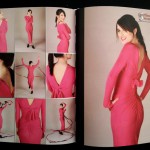
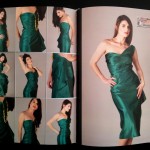
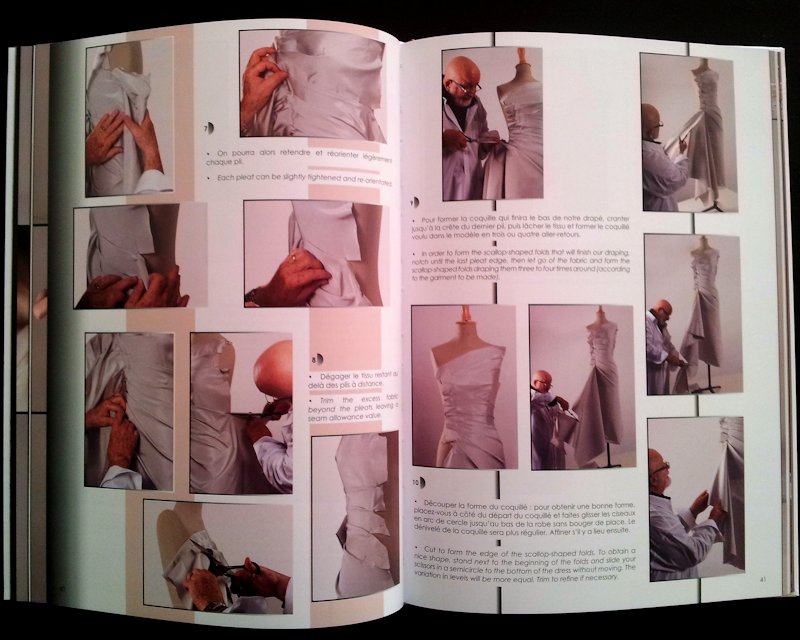
This one is quite different from the usual draping text books. It does not cover all the basics. Rather, the author, who worked for the Parisian couturiers Patou and Pierre Cardin, focused on six kinds of draping that he feels demonstrate the art of draping. There’s a sample dress design for each and step-by-step photos of the draping process…
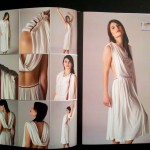
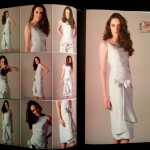
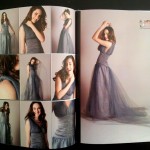
Not every design is my cup of tea, but they’re look more high fashion than in a lot of draping and pattern-drafting books. Well, most of these books don’t even have photo illustrations. So no competition there.

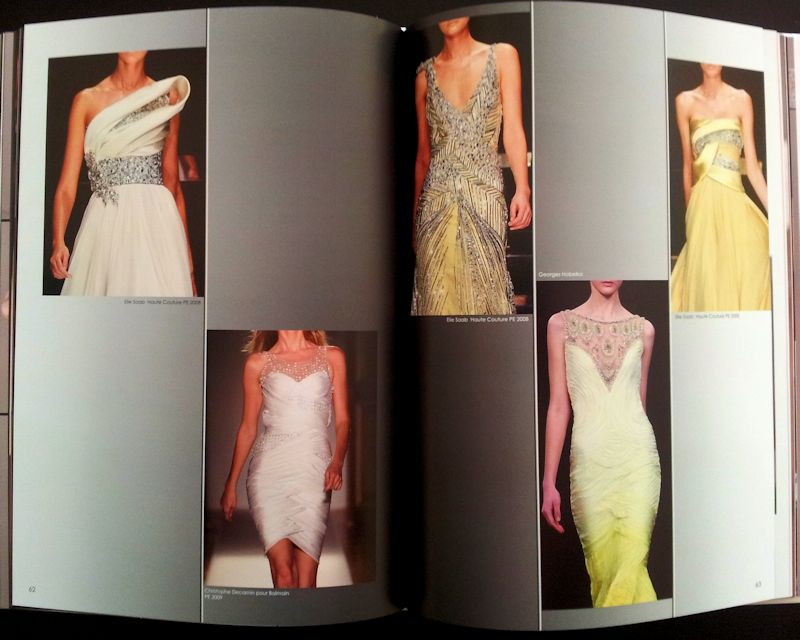
There are also plenty of other high fashion runway photos illustration the application of these different draping methods. These aren’t illustrated with step-by-step draping guide. But I don’t feel cheated like I do with some of the other books. The sample designs that he does go through in details make me feel that he knows what he’s talking about and those runway photos aren’t just to lend an air of authority to an otherwise unexceptional book.

draping-bk1-7draping-bk1-8

So not really your starter draping book, but certainly compliments those more basic books. I really like it because I’m mostly inspired by fashion photos & clippings I collect, and the draping projects in this book look much more inspiring than the mundane examples in most other draping books. You almost feel like you’ll be able to create one of those fabulous couture dresses one of these days. Now the only problem is where to wear it to!

A word of caution though. The book is in English & French. I find it a bit jarring to spot the English instructions amongst the French.


Draping: The Complete Course

I’ve wanted this one ever since Peter of Male Pattern Boldness reviewed it, but couldn’t justify it without a working dress form.

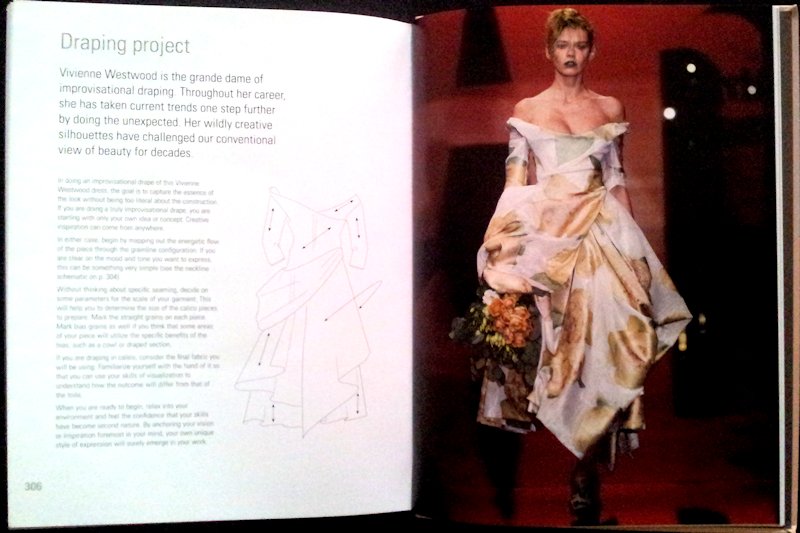
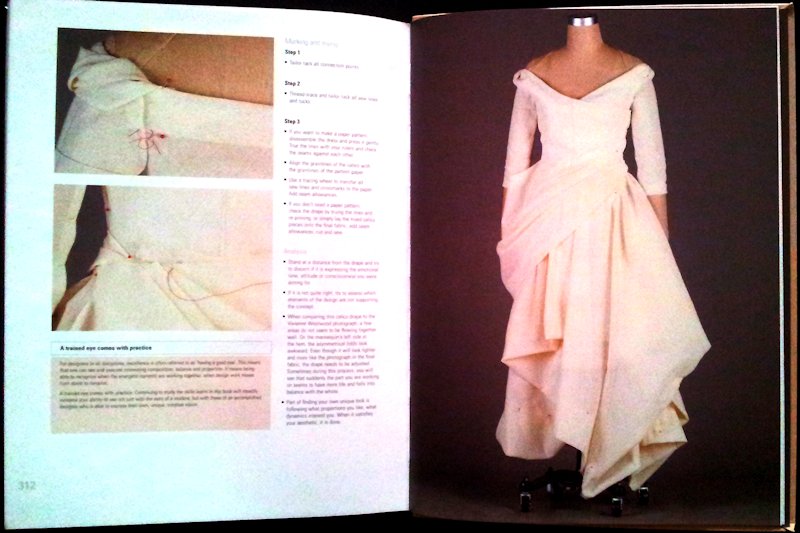
This one is more like the standard draping books. It does the some basics, but isn’t as comprehensive in the variations of designs covered as my Draping for Fashion Design. But it most definitely is more inspiring. I mean, it even has a recreation of a Vivienne Westwood dress. Yum!

draping-bk2-1draping-bk2-2

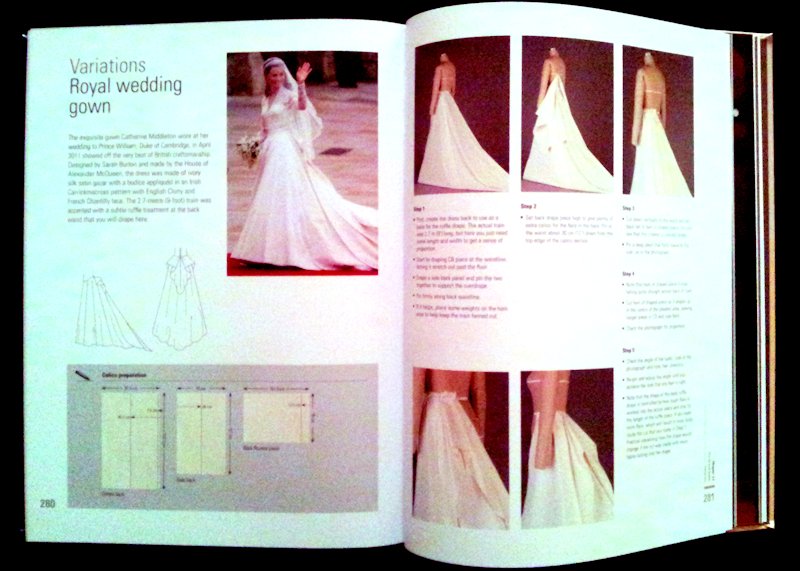
Celebrity junkie are you? How about recreating the train of Kate Middleton’s Alexander McQueen wedding dress…
draping-bk2-3

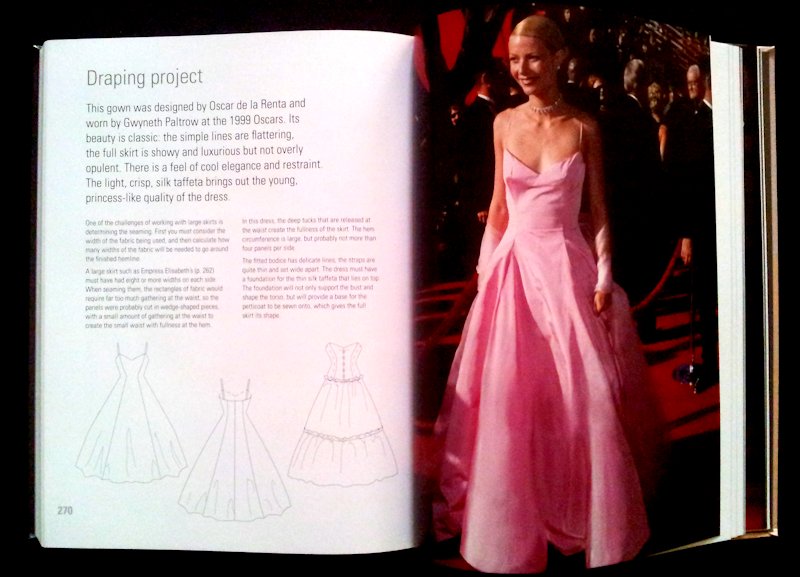
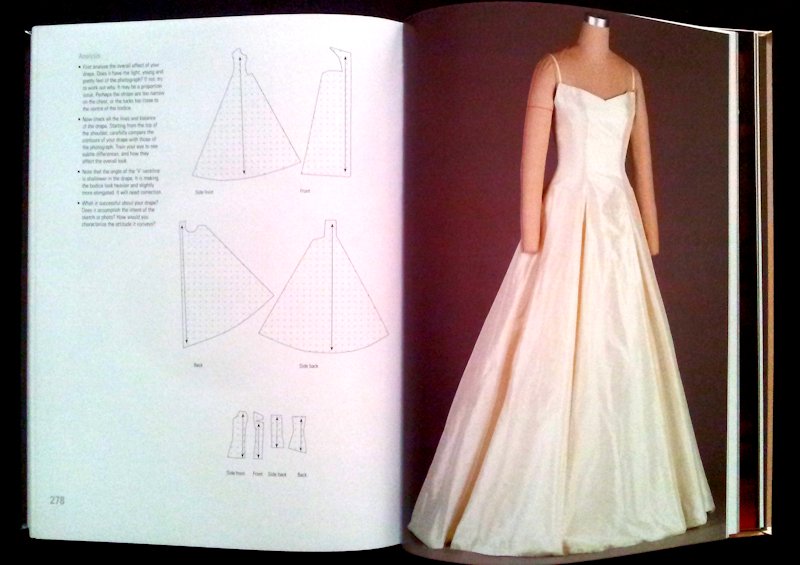
Or the Oscar de la Renta dress that Gwyneth Paltrow wore the year she won the Oscar!

draping-bk2-4draping-bk2-5

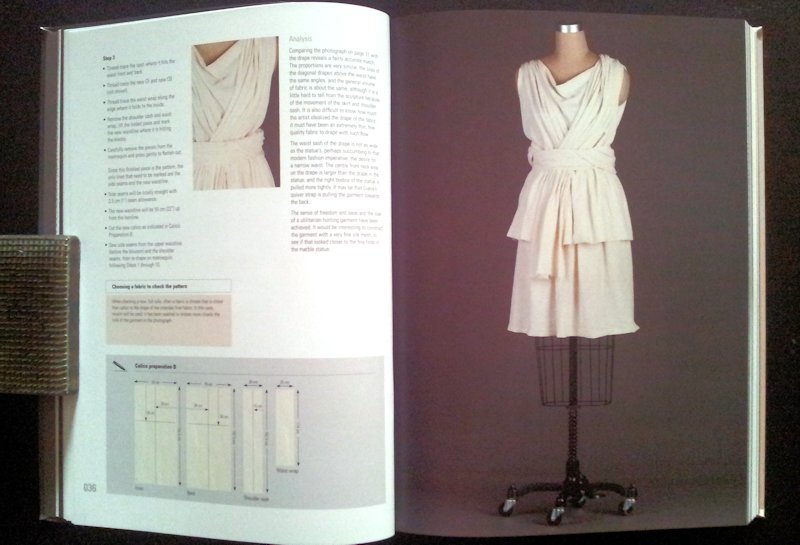
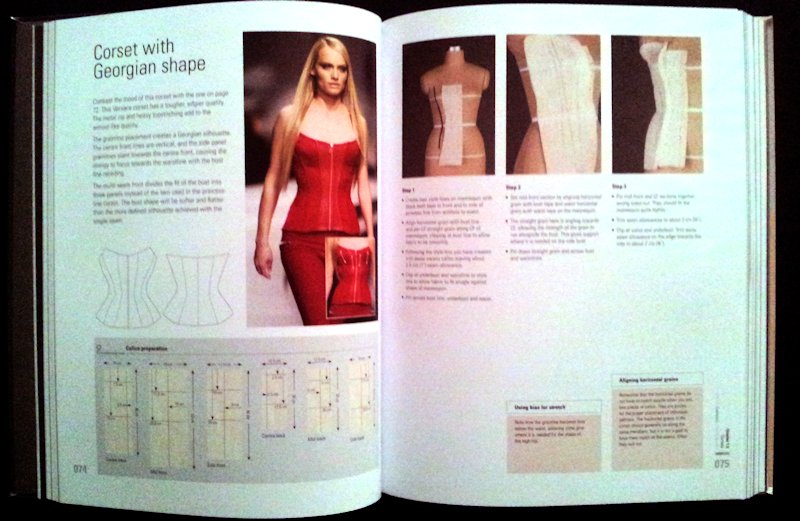
More inspired by history? There’s this Grecian dress and this corset with Georgian shape for you…

draping-bk2-7draping-bk2-6

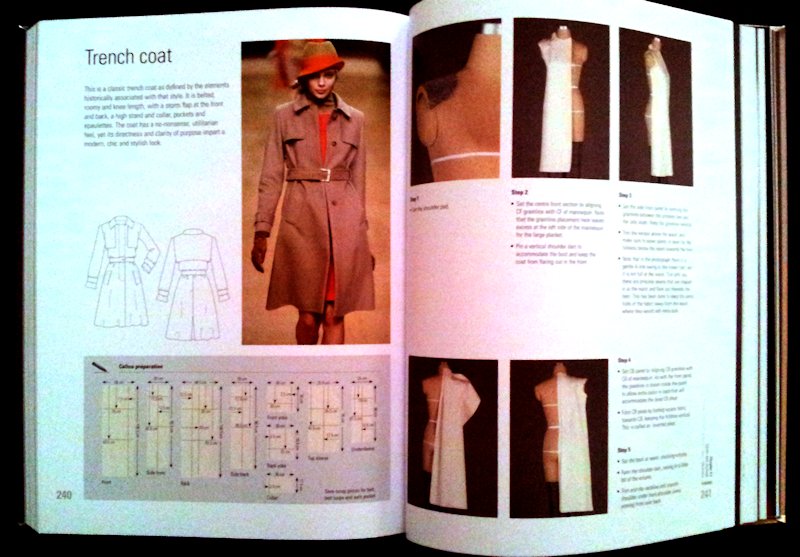
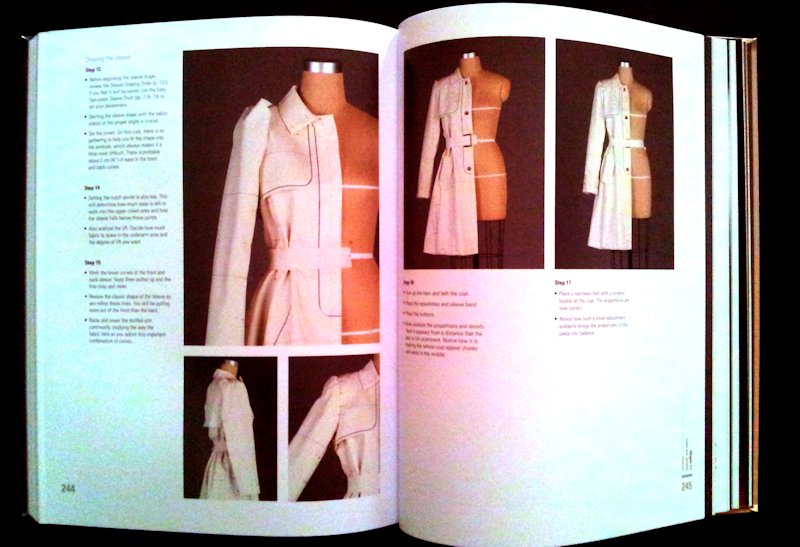
Want classy & smart? Can’t beat a well-shaped trench!

draping-bk2-8draping-bk2-9

OK, maybe it’s just me. But this home sewer just can’t mentally stretch from illustrations of your typical draping book to fabulous garments of the fashion mags. This coffee table style book hits the sweet spot and get my dough. Let’s just hope it won’t feel be horribly dated in a decade or two!


And last but not least, and not a draping book…

Vintage Couture Tailoring

I saw this in a brick & mortar bookstore and was hooked by these photos:

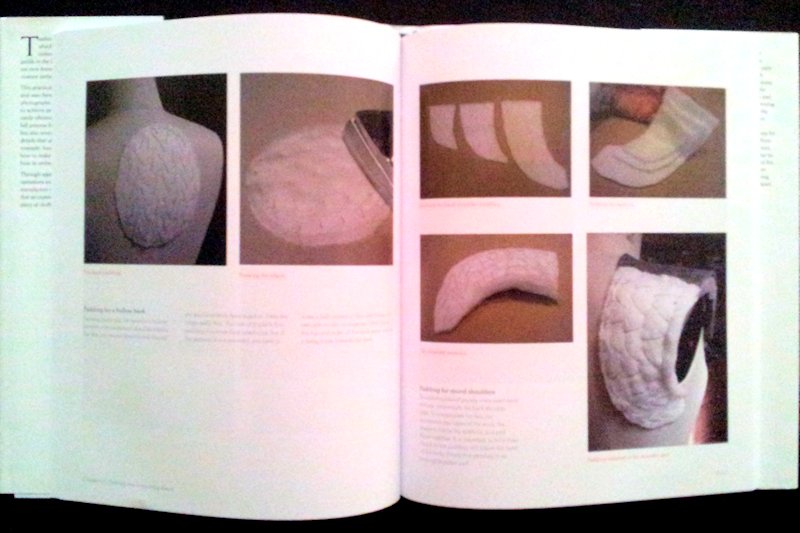
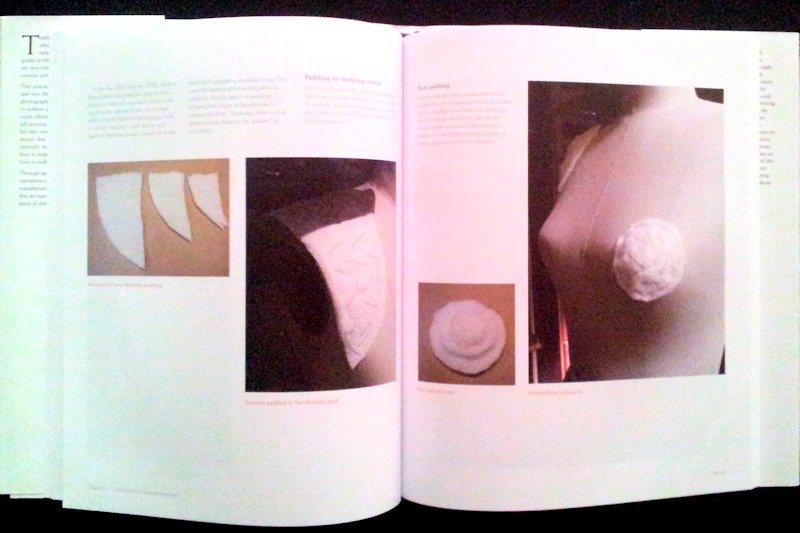
tailoring-bk-1tailoring-bk-2

I mean what the… LOL. I’ve never seen back pad & bust pad mentioned in any other tailoring books.

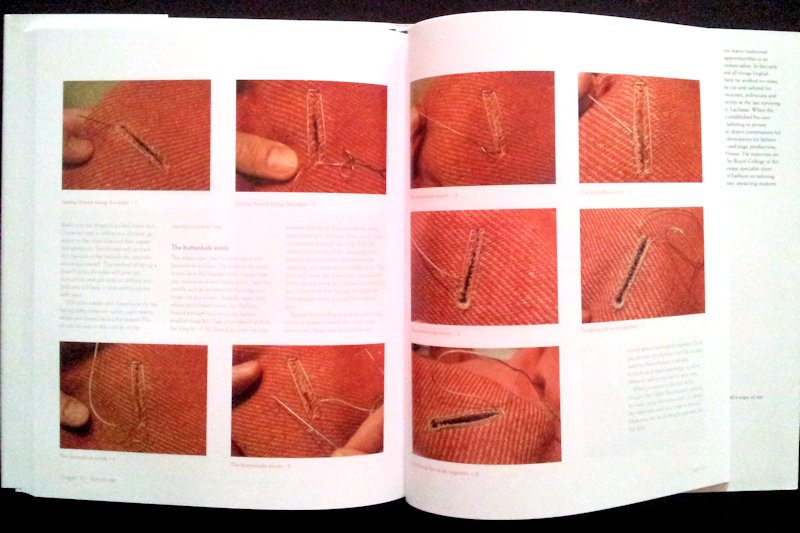
OK, if it was just this it wouldn’t justify the purchase. But the book is full of lots of step-by-step photo-illustrations. And you know I like my photo illustrations!

tailoring-bk-4 Granted, it’s just one jacket all the way through. And it doesn’t cover fitting.

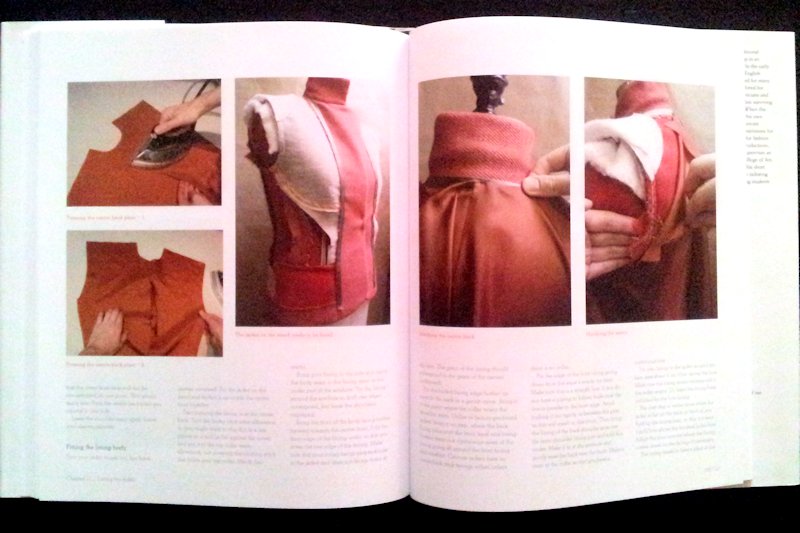
But I’m sure I’ll learn something new. Something in addition to the padding in weird places, which I may very well make use of now I know how lopsided I am. I mean, just look at the innards of that jacket…

tailoring-bk-3

I feel like if I practice these techniques for long enough, they may let me through the back door of Savile Row!

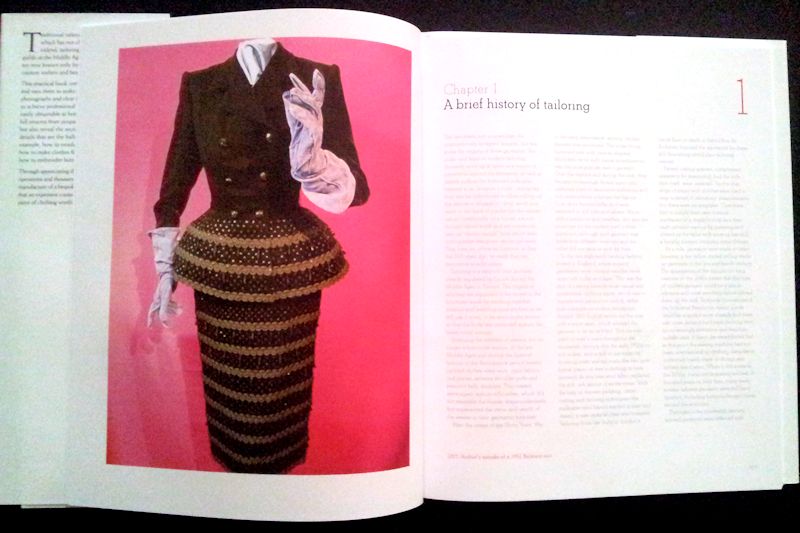
And again, attractive example of the author’s handiwork really help sells the book to me. Here’s a remake of a 1951 Balmain suit he made…

tailoring-bk-5

The only complaint I have is that like other reviewers, I also find the text very difficult to read because the text colors weren’t dark enough. A magnifying glass helps though.


OK, better get back to that dress form so I can justify these purchases…

Custom Dress Form v2.0: part 3

So let’s get back to Q. Yes, I’ve decided to christen her Quasimodo. Or Q for short (with a sideways nod to James Bond). She’ll be my smart cookie gadget girl, slightly deformed but still beautiful.

And what tricks has she got for us up her sleeves? Well, you already know about her hidden foam bra cups. This time we’ll check out her innards & leg. Yes, just the one. But she’s got one hefty hoof to keep her grounded…

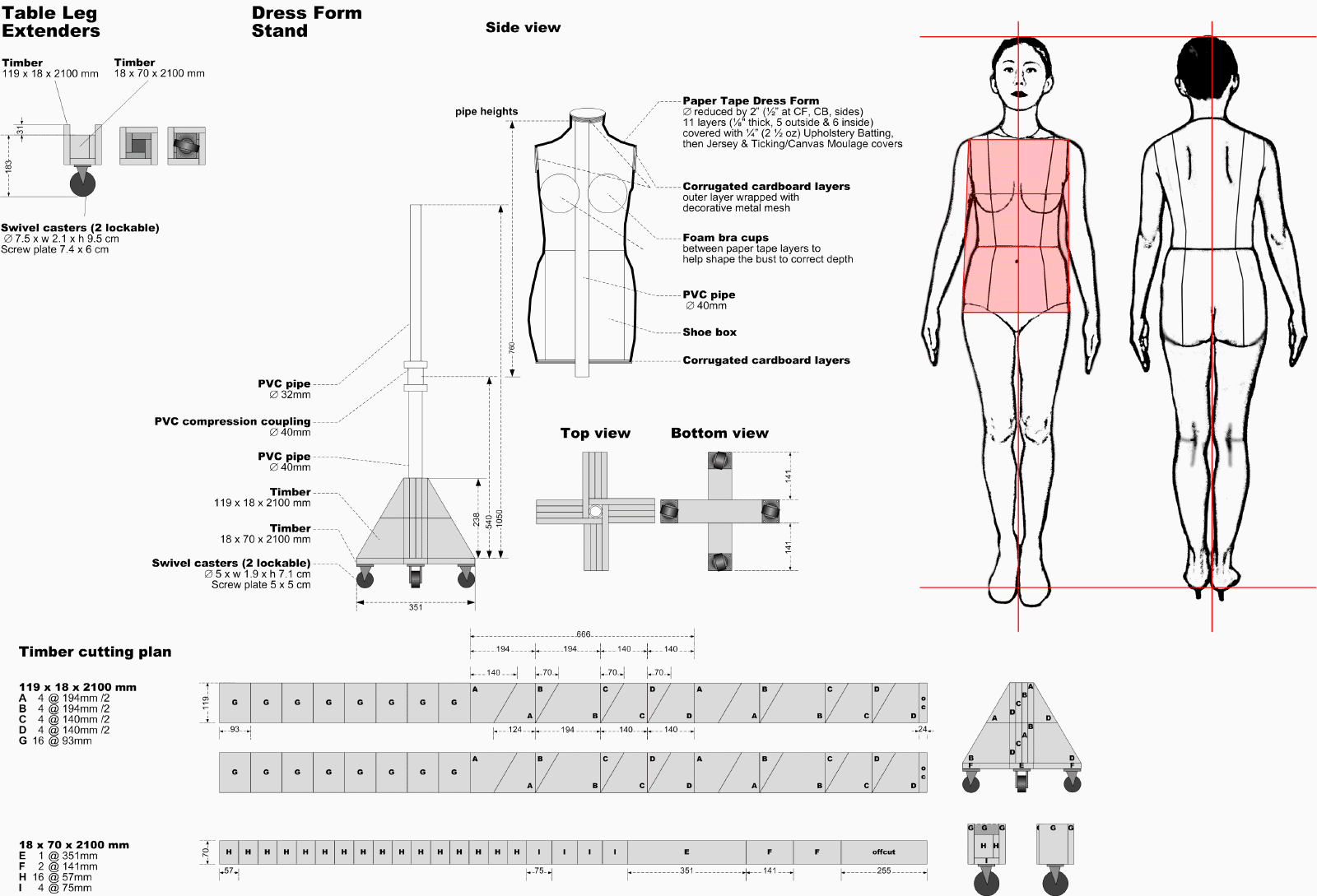
And here’s the tidied up master plan with lessons learnt…

dressform-stand

  • With 11 layers of paper tape that amount to about 1/8″ she was sturdy enough to be left hollow.  OK, you can’t take a sledge hammer to her or squash her with a heavy load. But draping & fitting don’t usually call for such tactics anyway.
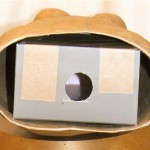
  • To keep her PVC pipe spine vertical, I added the shoe box at the base and cardboard at the neck.  Both have holes cut to exact diameter of her spine to wedge it in place. Hot glue gun comes in handy too.
  • The holes – hem, armholes, neck – were then sealed off with 2-3 layers of cardboard, cut to the inside diameter of these holes, then glued & paper-taped in place. I plan to cover the outside layer of the neck & armholes with this craft metal mesh I have in the stash. Can’t even remember what I bought that for, but it’s preeeee-t-t-y.
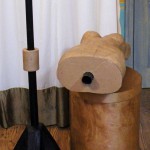
  • Her spine goes over a narrower pipe in the stand. This makes her turnable – though the swivel caster wheels would have done this as well. More importantly for a dress form without collapsible shoulders, she can come off the stand. It’s handy for putting on pull-over garments that won’t easily pull down over her stiff wider shoulders but would happily pull up her underdeveloped hip.
  • As for the stand…sadly for me in the UK many of the usual suggestions for stands (IV drip pole, swivel chair base, 2nd hand dress form, xmas tree stand, PVC pipes, etc.) are either not cheap or not pretty & sturdy enough. So I concocted something my limited DIY skills could just about manage with timber planks, PVC pipes, & swivel caster wheels. It’s based on a DIY xmas tree stand instruction that someone posted on Artisan Square. I made the wood base taller because I was worried that without enough support the PVC pipe might bend or tilt over time. The weight of the wood also adds to the stability of the stand. I was able to get most of the PVC parts in black & stain the wood so that the stand match other furnishing in my sewing room.

Next up, fattening Q up! It is coming up to xmas after all.

TNT Knit Block…or is it?

So, while we’re on the Knit Block detour we might as well finish this conversation.

As you know, I’ve been using my adjusted Burdastyle 2012-09-123 T-shirt as my tentative Knit Block. And it’s been working OK. No major complaint apart from the sway-back type puddle in the lower back. So I thought I’d try designing with it.  Nothing fancy, just a simple U-neck T.

bs201209123mod1_0dsgn-1 I was going to make it with 3/4 sleeves. But the fabric I had in mind was a $1/yard remanent from FIDM’s Scholarship Store in LA, so not enough for long sleeve. No problem I thought. I’ll just make a short sleeve version.

Straightforward right? Sadly no.

See those pulls emanating from the neckline towards the shoulder? I had no such problem with the previous makes based on this Knit Block. It could be the fabric, though this one seem just as stretchy. My bet though is on the short sleeve. All my previous makes were long sleeves. I think maybe the weight of the long sleeves pulled the shoulder seams in place. So I hadn’t really noticed that the shoulders were really too short.

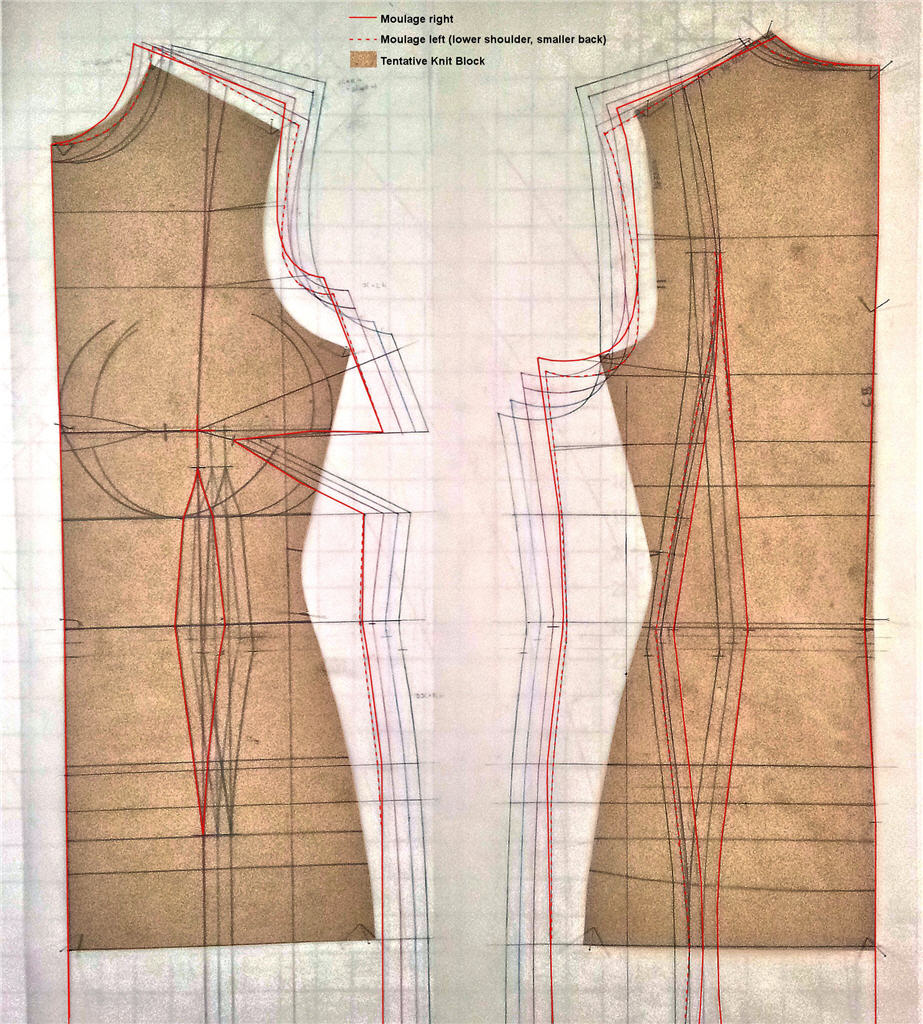
Here’s how it compare with my zero-ease Moulage pattern:

bs201209123block_1fit
Apology for the confusing extra lines – they’re for the blouse/dress, jacket, & coat slopers. I’m waiting to test them out with muslins before separating them into heavy paper Blocks. The heavier red lines show the Moulage.

The shoulder is about 3/8″ too short. Waist is zero ease, and Bust & Hip are both currently negative ease (even accounting for the bit taken out by the Moulage darts).

I think I need to redo the Knit Block, get back to basic principles. Specifically, where it’s OK to have negative ease and where it should be kept at zero ease. And maybe figure out a totally zero-ease Knit Block for those less stretchy knit fabrics.

And I thought I was saving time by starting with a commercial pattern for knit! Sometimes there’s no substitute for learning properly, especially if one intend to get creative with pattern making.